
Plant Calculator
Shop Bulk Perennials Online, Delivered Free to Your Door
How Many Plants Do You Need?
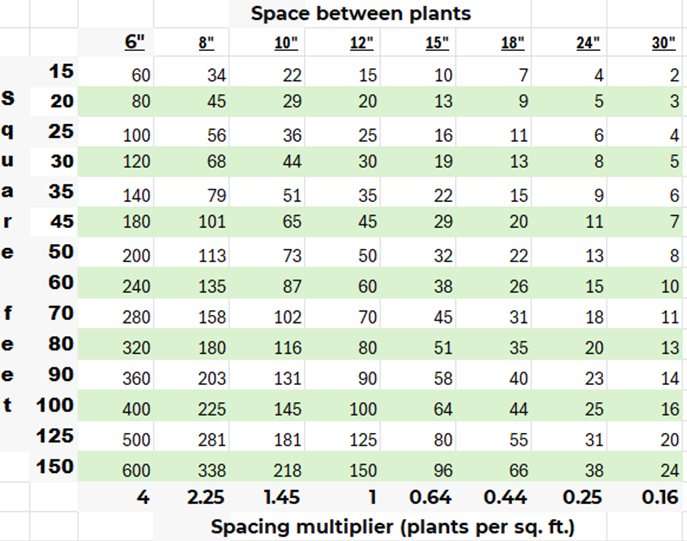
Above chart is for Grid planting method. For other sizes, shaped areas, and methods, see below and use the following formula to calculate how many plants you will need:
(Area in sq. feet) x (Spacing Multiplier) = Number of plants needed
(Area is 2 feet by 25 feet = 50 sq. feet) x (Spacing 12 inches apart Spacing Multiplier is 1.0 ) = 50 is the number of plants needed
Finding Unknown Spacing Multiplier
For other spacing requirements, use the following formula to figure your multiplier:
Multiplier = 144/X2 where X = the spacing distance in inches you need
Example: If you need a spacing of 13.5 inches, your plant multiplier would be 0.79:
|
144 |
= |
144 |
= |
0.79 |
13.52
|
182.25 |
multiplier |
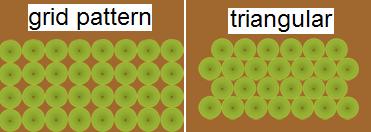
The above chart and formula are based on planting in a grid pattern. If you are planting in a staggered or equilateral triangular pattern (which gives a more massed effect) the rows will be a little closer together and more plants will be needed.
An additional 15% will be required and the row spacing would be reduce by a factor of 0.866 (the sine of 60 degrees) for the equilateral triangular layout.
For example - based on 100 square feet and a spacing of 12 inches, 100 plants are needed. In a triangular pattern 15 more plants would be needed (100 x 15% = 15). Instead of 12-inch rows, rows would be 10.4 inches apart (12 x .866 = 10.392).
Grid vs. Triangular spacing
A grid spacing of plants is divided into areas of equal space and one plant in each center. Grid spacing allows for more area open space and has potential benefit for disease management, but it is not as space efficient as triangular spacing.
Triangular spacing, is a lattice of equilateral triangles (they all have sides of the same length, and all internal angles are equal to 60 degrees) with a plant in each corner. This arrangement maximizes the use of space but may increase the chance of spreading diseases. Triangular spacing is frequently used in landscaping.

Plant Calculations
Calculating the number of perennial plants you need for a given area involves a few key factors:
1. Determine the Area:
- Square or Rectangular Areas: Multiply length x width to get the area in square feet.
- Circular Areas: Use the formula πr², where r is the radius (half the diameter) of the circle.
- Triangular Areas: Use the formula (1/2) x base x height.
- Irregular Shapes:
- Break it Down: Divide the irregular area into smaller, simpler shapes (squares, rectangles, triangles, circles). Calculate the area of each smaller shape and add them together.
- Grid Method: Draw a grid over the area on a piece of paper or using stakes and string in the actual space. Count the number of full squares within the area. For partial squares, estimate their coverage (e.g., half a square = 0.5). Add up the total number of squares, then multiply by the area of each individual square in your grid.
2. Spacing:
- Check Plant Tag or Research: Find the recommended spacing for the specific perennial you're planting. This is usually provided on the plant tag or can be found online or in gardening books. Spacing is crucial to avoid overcrowding and allow for proper growth.
- Consider Mature Size: Spacing should be based on the plant's mature size, not its size at planting time.
3. Calculate Plants Needed:
- Square Foot Method: Divide the total area (in square feet) by the area each plant will occupy (spacing in feet x spacing in feet).
- Example: If your area is 100 square feet and the recommended spacing is 12 inches (1 foot), each plant needs 1 square foot (1ft x 1ft). Therefore, you'll need 100 plants (100 sq ft / 1 sq ft per plant).
- Spacing Multiplier: Some resources provide spacing multipliers. Multiply the area by the multiplier to determine the number of plants.
- Example: If your area is 100 square feet and the spacing multiplier for 12-inch spacing is 1, you'll need 100 plants (100 sq ft x 1).
Important Considerations:
- Staggered Planting: For a more natural look and better ground coverage, consider staggered planting. Instead of planting in rows, offset the plants in each row, creating a triangular pattern. This may slightly increase the number of plants needed.
- Adjust for Irregularities: When dealing with irregular shapes, you may need to adjust the number of plants slightly to account for curves or corners. It's often better to have a few extra plants than not enough.
- Plant Density: Some gardeners prefer a denser planting for quicker coverage, while others prefer a more spaced-out look. Adjust the spacing accordingly.
- Grid Spacing: Plants are arranged in equally spaced rows and columns, like a grid. This is straightforward for calculations.
- Triangular Spacing: Plants are positioned so that each one sits in the center of a triangle formed by three surrounding plants. This creates a more natural, staggered look and often allows for slightly higher plant density.
Calculations
- Area Determination:
- Follow the same methods as described previously for square, rectangular, circular, and irregular shapes.
- Spacing:
- Grid: Determine the desired spacing between plants in both directions (rows and columns).
- Triangular: Determine the center-to-center distance between plants within the triangular pattern.
- Plants Needed (Grid Spacing):
- Divide the total area by the area occupied by each plant (spacing x spacing).
- Example: 100 sq ft area, 12-inch (1 ft) spacing: 100 plants needed (100 sq ft / 1 sq ft per plant).
- Plants Needed (Triangular Spacing):
- Calculate Area of a Single Triangle:
- Equilateral Triangle: (√3 / 4) x (spacing)², where spacing is the distance between plant centers.
- Calculate Plants per Square Foot:
- Divide 1 sq ft (144 sq in) by the area of a single triangle (in square inches).
- Multiply by Total Area:
- Multiply the plants per square foot by the total area to find the number of plants needed.
Example (Triangular Spacing):
- Area: 100 sq ft
- Spacing: 12 inches (1 ft)
- Area of a single triangle: (√3 / 4) x 1² = 0.433 sq ft
- Plants per sq ft: 1 sq ft / 0.433 sq ft/plant = 2.31 plants
- Total plants needed: 2.31 plants/sq ft x 100 sq ft = 231 plants
Important Notes:
- Spacing Adjustments:
- Triangular spacing generally requires about 15% more plants than grid spacing for the same area.
- Adjust row spacing in triangular patterns: Multiply the grid spacing by 0.866 (sine of 60 degrees) to find the distance between rows.
- Visualizing: Sketching a small section of the triangular pattern on paper can help you visualize and understand the spacing.
- Irregular Shapes: For irregular areas, you may need to estimate and adjust the number of plants based on the shape and spacing.
Tools:
- Online Calculators: Some online plant calculators can handle triangular spacing calculations.
- Graph Paper: Useful for sketching out planting areas and triangular patterns.
- Spreadsheet Software: Can be used to create a grid and calculate plant numbers for different spacing options.
With careful planning and calculation, you can achieve the desired plant density and visual effect using either grid or triangular spacing in your garden.
1. Determine the area of the circle:
- Measure the radius of the circle (distance from the center to any edge).
- Multiply the radius by itself and then by pi (3.14159). This gives you the area of the circle in square units.
2. Choose the desired plant spacing:
- Refer to the planting recommendations for your chosen plant species. This will typically specify the recommended spacing between individual plants to ensure optimal growth and density.
3. Divide the circle area by the plant spacing:
- Divide the total area of the circle (calculated in step 1) by the desired plant spacing (obtained in step 2). This gives you the approximate number of plants needed to fill the circle.
Here is an example:
- You have a circular planting area with a radius of 5 feet.
- You want to plant with a recommended spacing of 12 inches (1 foot).
Calculation:
- Area of the circle = 3.14 * 5^2 = 78.5 square feet
- Number of plants = 78.5 square feet / 1 square foot/plant = 78.5 plants
Note:
- Round the final number of plants up to the nearest whole number to ensure adequate coverage.
- Consider additional factors like plant growth habit and mature size when determining the final number of plants. You might need to adjust the spacing slightly to accommodate larger plants.
Planting in circles adds a dynamic element to your garden design. Here's how to figure out your plant needs:
1. Measure the Area:
- Full Circle:
- Measure the radius (distance from the center to the edge).
- Area = πr² (π ≈ 3.14159, r = radius)
- Partial Circle (Pie-Shaped):
- Measure the radius and the central angle of the pie-shaped section (in degrees).
- Area = (πr² * angle) / 360°
2. Determine Plant Spacing:
- Check Plant Tags or Research: Find the recommended spacing for your chosen perennial. This ensures healthy growth and prevents overcrowding.
- Mature Size Matters: Base spacing on the plant's mature size, not its size at planting time.
3. Calculate Plants Needed:
- Divide Total Area by Area per Plant:
- Area per plant = spacing x spacing
- Number of plants = Total area / Area per plant
- Example (Full Circle):
- Radius = 5 feet
- Spacing = 12 inches (1 foot)
- Area = 3.14159 * 5² = 78.54 sq ft
- Number of plants = 78.54 sq ft / (1 ft x 1 ft) = 78.54 plants (round up to 79)
Important Considerations:
- Spacing Adjustments:
- For a fuller look, you might plant slightly closer than the recommended spacing.
- Consider the plant's growth habit (spreading, clumping, upright). Adjust spacing to accommodate how the plant naturally fills space.
- Partial Circles: When planting in a pie-shaped area, visualize how the plants will fit the curve. You may need to adjust the number slightly to achieve the desired look.
- Staggered Planting: A staggered arrangement (like a triangular pattern) can create a more natural appearance and better ground coverage, but you'll need slightly more plants.
Tips for Success:
- Visual Aids: Use graph paper or draw a scale diagram of your planting area to help visualize spacing and plant placement.
- Flexibility: Be prepared to adjust your calculations slightly based on the specific plants and the overall design you want to achieve.
By following these guidelines, you can confidently calculate the number of perennials needed to create a stunning circular or partial circular planting in your garden.
Grid Spacing
Pros:
- Easy to Plan and Visualize: Straightforward rows and columns make it simple to calculate plant needs and map out your garden design.
- Efficient Use of Space: Maximizes planting density in a given area, especially for smaller plants.
- Easy Access for Maintenance: Clear rows provide easy access for weeding, fertilizing, and harvesting.
- Orderly and Formal Appearance: Creates a structured and symmetrical look, suitable for formal gardens or vegetable beds.
Cons:
- Less Natural Look: The rigid structure can appear less natural compared to a more randomized planting scheme.
- Potential for Overcrowding: If plants grow larger than anticipated, overcrowding can lead to poor air circulation and increased disease risk.
- May Hinder Spreading Plants: Can restrict the natural spread of some perennials.
Triangular Spacing
Pros:
- More Natural Appearance: The staggered arrangement mimics natural plant growth, creating a more visually appealing and less rigid look.
- Better Ground Coverage: Plants fill in spaces more effectively, reducing weed growth and maximizing soil shading.
- Improved Air Circulation: Reduces the risk of fungal diseases by allowing better airflow between plants.
- Accommodates Larger Plants: Provides more space for individual plants to reach their full size and spread.
Cons:
- More Complex Calculations: Requires a bit more effort to calculate plant numbers and spacing accurately.
- Slightly Lower Plant Density: Compared to grid spacing, you might fit slightly fewer plants in the same area.
- Can Be More Challenging to Maintain: Access for weeding and other tasks might be slightly less straightforward.
Which is Right for You?
The best choice depends on your priorities and the specific plants you're using:
- Formal Gardens or Vegetable Beds: Grid spacing often works well.
- Naturalistic Gardens or Larger Perennials: Triangular spacing is often preferred.
- Small Plants: Grid spacing can maximize the number of plants.
- Spreading Plants: Triangular spacing gives them room to grow.
Ultimately, the best approach is to consider the pros and cons of each method, visualize how the plants will fill the space, and choose the spacing that best suits your aesthetic preferences and gardening goals.