




Product Description
Sedum sieboldii
Common name: Stonecrop - October Daphne.
Zones 3 to 9, semi-evergreen.
Full sun.
Plants reach 6 to 10 inches tall and 12 to 18 inches wide;
low-growing, spreading species
forms circular mound of arching stems from central crown.
Growth rate: Moderate, easy to grow.
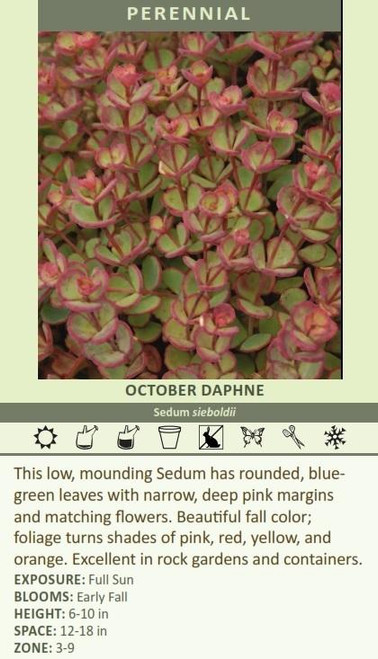
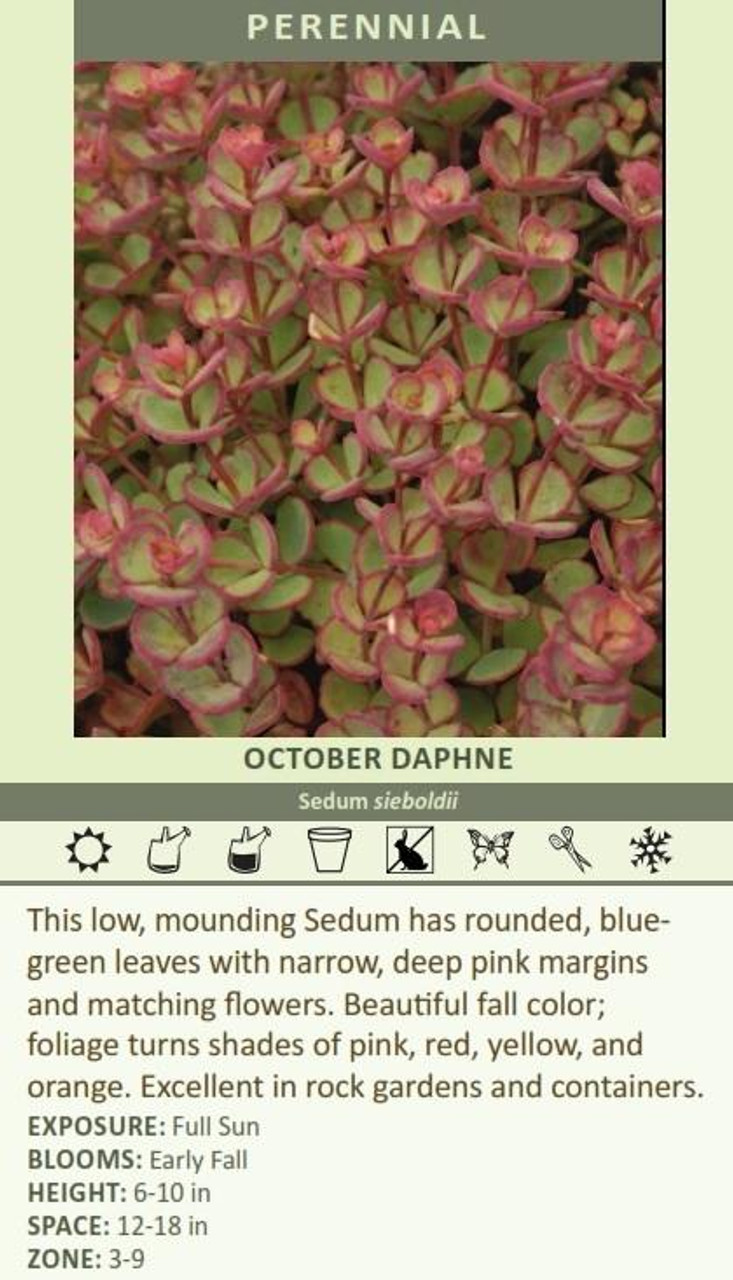
Thick, round, scalloped, blue-green leaves are narrowly trimmed in deep pink; by fall pink edge intensifies. A colorful Sedum favorite - its foliage looks great all summer long and in the fall, if sited properly, may display shades of pink, red, yellow, and orange. Clusters of bright-pink flowers appear in late summer to fall. Sedum sieboldii can be used as a small-scale groundcover, as an edging, in rock gardens, or even tucked into cracks in a rock wall.
Ten (10) plants in 4.5 inch containers per flat (or tray).
Other Details
The most important part of the plant is its root system. Healthy roots are the foundation of a healthy, vibrant plant. The type of plug container used is based on the specific needs of the plants. Perennials offered as bare root traditionally perform better when planted as bare root.Planted in a specialized mix, potted plants have well established root systems. Top growth stage will vary depending on the current life cycle and time of year when shipped. In Winter and early Spring dormant plants may be shipped. Dormant plants may be planted right away, even before the last frost date.
Most bare root varieties are field grown for at least one season, though Hemerocallis and are grown for two seasons. The bulk of the soil is removed during the harvesting process and the tops of most varieties are trimmed back to the crown. They are graded, packed in shredded aspen or sphagnum moss and stored in freezers until ready to be shipped.
See our Container Sizes and Bare Root Perennials pages for more information.
Plant information and care is provided in the Overview section, Plant Genus Page and general information is provided in the Planting Care & Guides. Additional questions can be asked on each Plant page.
Plant Spacing: Using the maximum mature spread or width of a plant to guide spacing, ensures space to grow to full size. To fill an area sooner, plant them closer together. Just remember, future thinning or transplanting may be needed.
Water: Keep a close eye on newly planted perennials, especially throughout the first growing year. Most early plant loss is due to too much or too little water!